Bambu Lab

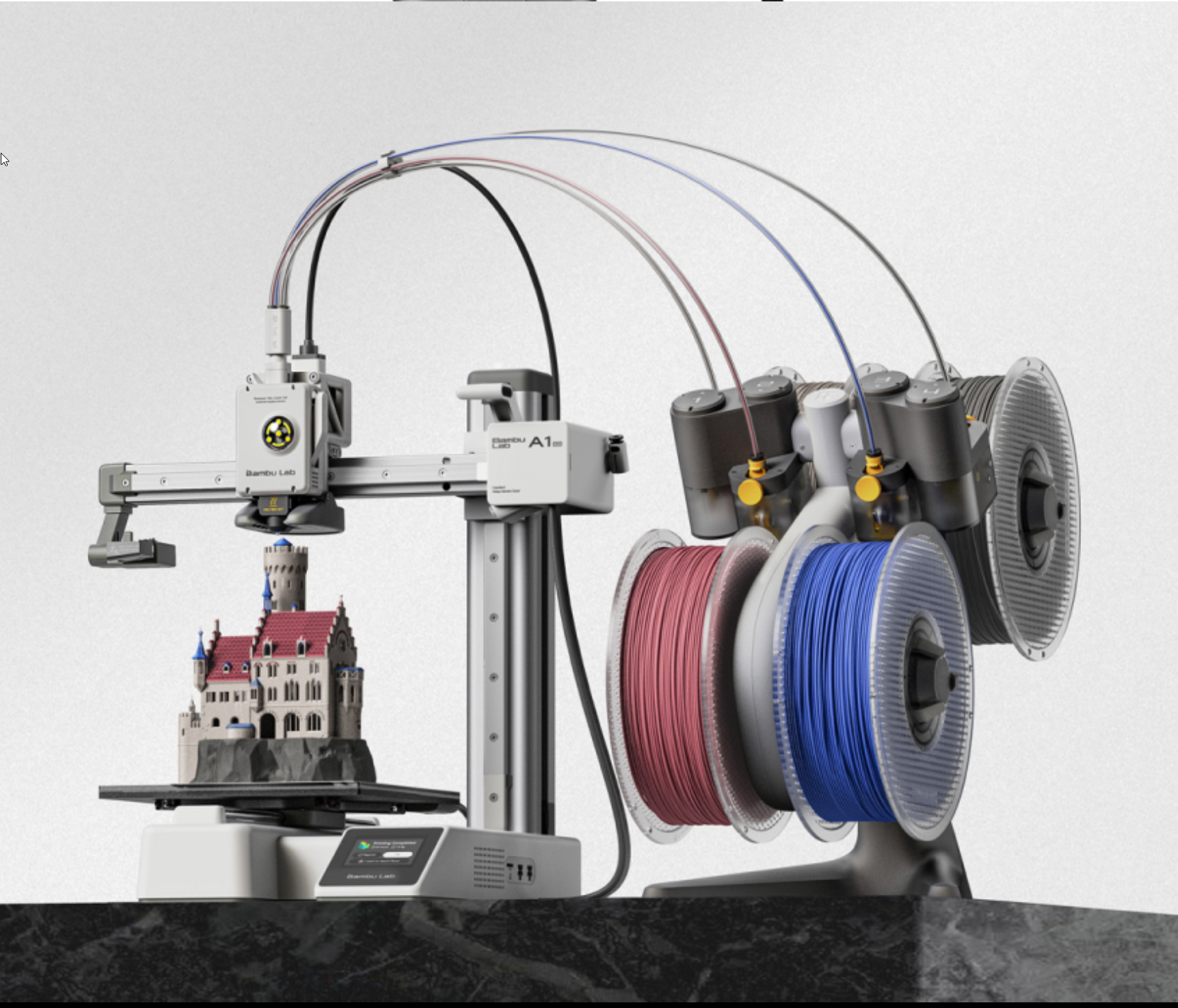
Bambu Lab A1

Full-size, fully automatic

The A1 mini's bigger sibling: the same hands-off calibration and quick-swap hot end in a 256 mm cube. The best value in the line-up if you do not need an enclosure.

Build volume
256 × 256 × 256 mm
Motion system
Cartesian (moving bed)
Max speed
Up to 500 mm/s
Max acceleration
10,000 mm/s²
Price on request

Ask us for a price

We price printers per order so you get the current rate. Send us a message and we will come back with a quote and a lead time.

Why this machine

  • 256 mm cube build volume — four times the A1 mini's capacity
  • Full-auto bed levelling and flow calibration
  • Up to 500 mm/s with active vibration compensation
  • AMS lite add-on for four-colour printing
  • Quick-swap nozzles in 0.2–0.8 mm

A closer look

The mini's routine, four times the volume

Same auto bed levelling, same flow calibration, same quick-swap hot end — in a 256 mm cube. If your prints keep bumping into the A1 mini's build volume and you do not need an enclosure, this is the machine to buy.

Nozzles from 0.2 to 0.8 mm

One printer covers both ends of the trade-off: 0.2 mm when the model is fine detail and you do not mind waiting, 0.8 mm when the part is big and you want it finished today.

A bed that reaches 100 °C

Twenty degrees hotter than the mini's, which is what makes PETG behave on large flat parts — the corners stay down instead of peeling as the print grows.

Specifications

Build volume256 × 256 × 256 mm
Motion systemCartesian (moving bed)
Max speedUp to 500 mm/s
Max acceleration10,000 mm/s²
HotendUp to 300 °C, quick-swap
Heated bedUp to 100 °C
EnclosureOpen frame
Multi-colourAMS lite (4 spools, sold separately)
MaterialsPLA, PETG, TPU, PVA
ConnectivityWi-Fi, Bambu Handy app, microSD

How it compares to the rest of our line-up

Every machine we sell, on every spec any of them publishes. We would rather you bought the right one than the expensive one.

SpecBambu Lab A1this pageBambu Lab A1 miniBambu Lab P1SBambu Lab H2DBambu Lab H2C
Build volume256 × 256 × 256 mm180 × 180 × 180 mm256 × 256 × 256 mm~325 × 320 × 325 mm~330 × 320 × 325 mm
Motion systemCartesian (moving bed)Cartesian (moving bed)CoreXYCoreXY with dual-nozzle IDEXCoreXY with Vortek 8-hotend swap
Max speedUp to 500 mm/sUp to 500 mm/sUp to 500 mm/sUp to 1000 mm/sUp to 1000 mm/s
Max acceleration10,000 mm/s²10,000 mm/s²20,000 mm/s²20,000 mm/s²20,000 mm/s²
HotendUp to 300 °C, quick-swapUp to 300 °C, quick-swapUp to 300 °CUp to 350 °CUp to 350 °C
Heated bedUp to 100 °CUp to 80 °CUp to 100 °C——
EnclosureOpen frameOpen frameFully enclosed, chamber temperature monitoringEnclosed with a heated chamber—
Multi-colourAMS lite (4 spools, sold separately)AMS lite (4 spools, sold separately)AMS (4 spools per unit, up to 4 units)—Up to 7 colours, ~58% less purge waste
MaterialsPLA, PETG, TPU, PVAPLA, PETG, TPU, PVAPLA, PETG, TPU, ABS, ASA, PCPLA, PETG, TPU, ABS, ASA, PC, PA and CF compositesPLA, PETG, TPU, ABS, ASA, PC, PA and CF composites
ConnectivityWi-Fi, Bambu Handy app, microSDWi-Fi, Bambu Handy app, microSDWi-Fi, Bambu Handy app, microSDWi-Fi, Bambu Handy app, microSDWi-Fi, Bambu Handy app, microSD
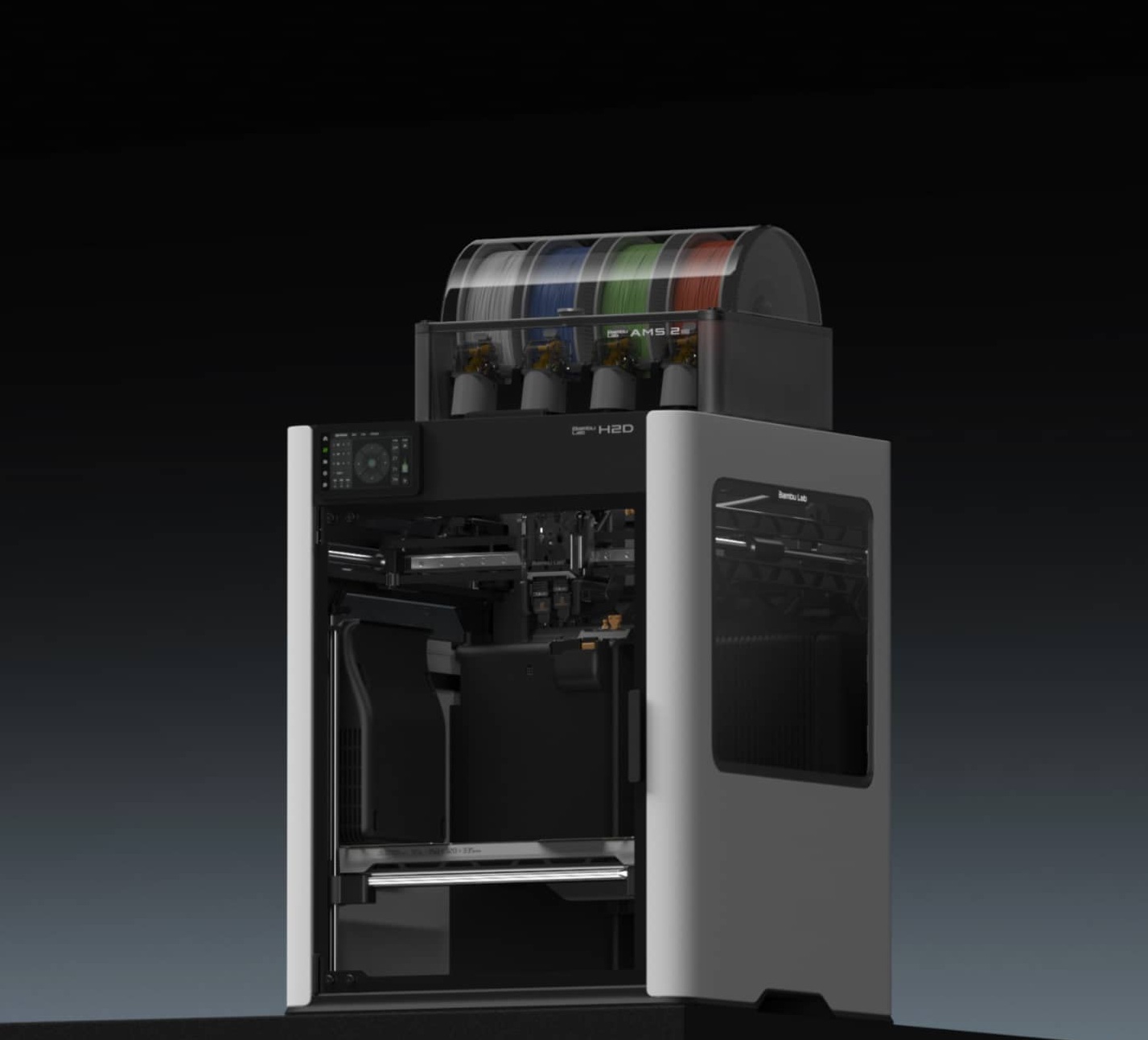
Multi-material———Dual independent hot ends; AMS-compatible—
Extras———Optional laser and cutting modules—
Chamber————Heated, up to 65 °C
Inspection————AI-vision quality control

— means that machine's spec sheet does not list the figure — not that it cannot do it. Ask us and we will check.

Questions before you buy

How is this different from the A1 mini?

Build volume and bed temperature. You get a 256 mm cube instead of 180 mm, and a bed that reaches 100 °C instead of 80 °C. The calibration, the speed and the AMS lite support are the same.

Can it print ABS or ASA?

No — it is open-frame like the A1 mini, so those materials will warp. The P1S and everything above it in this line-up are the enclosed machines.

Does it do multi-colour?

Yes, with the AMS lite add-on, which holds four spools. Sold separately, so you can add it whenever you actually want a second colour.

Is it really 500 mm/s?

That is the machine's ceiling with vibration compensation running, not a number every print hits — geometry, layer height and material all pull the real figure down. It is genuinely fast; treat the headline as a ceiling.

A1 or P1S for a first printer?

A1 if you print PLA and PETG and want the most build volume for the money. P1S if you already know you need ABS, ASA or polycarbonate, because no amount of tuning gets an open-frame machine there.

Can you help me choose?

Ask us before you buy — we run these machines commercially every day, so we can tell you which one actually fits what you print rather than which one has the longest spec sheet. And if you would rather not own a printer at all, send us the model and we will print it for you.

The A1 takes everything that makes the A1 mini easy to live with and gives it a full 256 mm cube. If your prints keep bumping into the mini's build volume but you do not need a heated chamber, this is the machine to buy.

Who it suits

Makers printing full-size functional parts, cosplay pieces and larger models in PLA and PETG. Pair it with an AMS lite and it becomes a genuinely capable four-colour printer for a fraction of the enclosed machines.

What it will not do

Like the mini, it is open-frame. ABS, ASA and carbon-filled filaments want an enclosure and a hardened nozzle — that is P1S and X1C territory.

Buying from ZeroCore

We are happy to talk through whether the A1 or the P1S is the right call for what you actually print. If you would rather skip owning a machine altogether, send us the model and we will print it.

Other printers we sell

See the whole catalogue →